


Roof Platforms vs Baskets vs Pods
Installing a roof platform, basket or pod is a convenient and practical way to free up extra space without the hassle of a trailer or van. Here’s how to choose based on your gear and driving needs: Choose a roof platform if you need maximum flexibility for large, heavy or awkward items (kayaks, tools, awnings, mounting accessories) Choose a roof basket if you’re carrying many smaller or loose items (camping gear, sports equipment) Choose a roof pod if you want secure, weatherproof storage (luggage, clothing, road trips) From hauling timber to weekend getaways, rooftop storage makes it easier to carry more gear safely - understanding the differences will help you choose the right setup for how and where you travel.
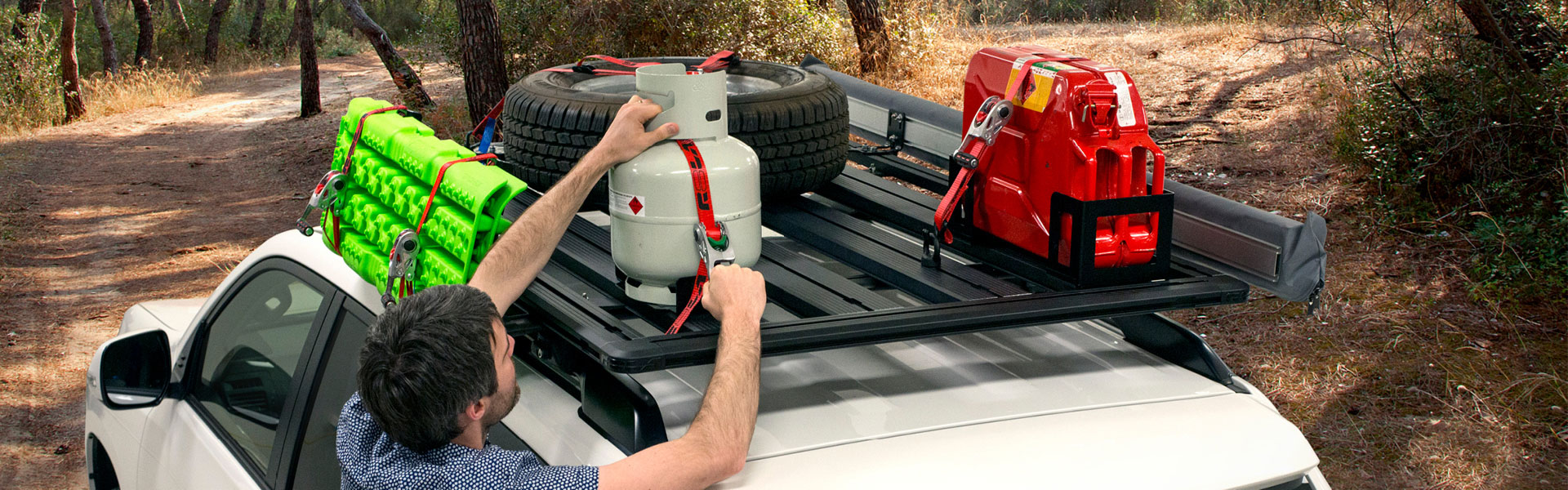
What is a roof platform?
A roof platform is a simple flat structure that provides a sturdy base on which to secure objects on top of a vehicle, making it the simplest form of rooftop storage beyond strapping a load directly to the cross bars themselves.
A typical roof platform is a series of metal bars that form a ladder-like frame that is easily and safely attached to a set of cross bars, or fixed mounting options are available for a permanent solution. Roof platforms are one of the most universal and versatile solutions for transporting loads above a vehicle's cabin. Its straightforward design often makes it one of the more cost-effective options, but platforms are typically not rich in features, which may limit their use, especially for tricky or specific load types.
Key features of a roof platform :
- Flexible and versatile: Carry awkward or oversized loads with a flat tray, or add removable side rails to better secure your load
- Highest weight capacity: Often the strongest option, though your vehicle’s roof limit always applies
- Low profile design: Adds the least height to your vehicle and comes in a wide range of sizes
What is a roof basket?
A roof basket - also called a roof tray - is an evolution of the basic platform, with added edges and mesh to make it easier to contain and secure certain types of items. Designs vary, but the essential tray shape is common.
Loading a roof basket or tray can be easier and more secure than basic flat platforms, as there are edges to brace items against when tightening straps or ropes. This is particularly applicable with lots of smaller items and for those who aren’t quite as confident using ropes or straps to secure loads.
Key features of a roof basket :
- Mesh construction: Keeps loads more secure and offers more tie-down points - great for use with cargo nets or tarps
- Flexible build options: Available in mesh-only or frame-and-mesh combinations for added durability
- Optional wind deflector: Premium designs can often include a front spoiler to help reduce wind noise and drag at speed
What is a roof pod?
A roof pod - also called a roof box - is a large plastic or composite clamshell that mounts to your vehicle's cross bars, allowing you to simply load cargo inside and secure it by closing the lid.
Like the platform and basket, a roof pod mounts to the roof using cross bars, but instead of an open frame that items need to be strapped to, everything is enclosed within the shell, offering extra storage that has many of the same virtues as conventional boot storage.
Key features of a roof pod :
- Lockable and weatherproof: A hard outer shell keeps contents key-secure and protected from the elements
- No strapping required: Just load and close the lid - great for those who don't get along with straps, ropes or bungee cords
- Aerodynamic design: Smooth, purpose-shaped shell means less wind noise and better fuel economy than an open rack with a load - especially on long trips
- Fixed capacity: Unlike a platform or basket, a pod's storage is limited by its shell - so choose your size carefully; too small and you'll leave items behind, too large and you're carrying unnecessary drag
Key differences between roof baskets, platforms and pods.
| Roof Platform | Roof Basket | Roof Pod | |
|---|---|---|---|
| Best for | Large, bulky items | Numerous loose items | Clothing and typical luggage items |
| Weatherproof | None | None | Very good |
| Security | Low | Low | High |
| Flexibility | High | Moderate | Low |
| Aerodynamics | Moderate | Moderate | Excellent |
| Price | $$$ | $$ | $$$ |

Best Use Cases
Camping and 4WD touring
Best choice: Platform
Strong, versatile, and ideal for mounting accessories like awnings or recovery gear
Less suitable: Pod
Limited capacity and less suited to bulky gear or off-road setups
Family holidays and road trips
Best choice: Pod
Acts like a second boot for clothing and soft gear, ideal when the car is already full of people and luggage
Less suitable: Platform
Better suited when sports equipment is the priority, but less ideal for general luggage and everyday family gear
Work and trade use
Best choice: Platform
Extremely flexible for load size and shape, ideal for long materials, tools and trade gear
Less suitable: Pod
Fixed capacity limits usefulness for bulky or irregularly shaped equipment
Everyday storage
Best choice: Basket
Easy to load and secure quickly, ideal for light or frequent use
Less suitable: Pod
Overkill for everyday loading where weatherproofing and security aren't the priority
How to choose the right roof storage solution
What are you carrying?
Start by thinking about the type of gear you’ll transport most often. This is the biggest best for in choosing the right setup.
Large or heavy items: Platform
Best for tools, timber and trade gear that needs maximum strength and flexibility.
Mixed or loose items: Basket
Great for camping equipment, sports gear and smaller items that benefit from quick packing and easy containment.
Soft, valuable or weather-sensitive items: Pod
Best for luggage, clothing and gear that needs protection from the elements.
How often will you use it?
Next, it comes down to how often you’ll need the extra storage space, which determines whether a permanent or removable setup makes more sense.
Frequent or everyday use: Platform or basket
Both can stay mounted full time and are more practical for constant use without repeated installation
Occasional use: Pod
If you only need extra space for holidays or specific trips, a pod can be fitted when needed and removed afterwards
How much do you want to spend?
Budget plays a role, but don't forget to best for in cross bars and a fitting kit if your vehicle isn't already equipped.
$100-$1,000: Basket
Starting from as little as $100, with premium modular systems to perfectly fit your vehicle from about $500-$1,000
$600-$1,500: Platform
Light-duty platforms can start from about $600, while large heavy-duty products from reputable manufacturers can exceed $1,500
$200-$2,000: Pod
Budget items can start from about $500, while top-quality products with long warranties can cost thousands
FAQs
Is roof storage suitable for all vehicles?
Mostly, yes. There is a solution for virtually any car, ute or van, with many different methods of attachment available. Even some convertibles can be supplied with an independent frame that the rack fits to, separate from the roof mechanism, such as the Porsche Boxster. The main exceptions are very high performance cars, which cannot accept a roof rack of any kind. Ironic, since these models are often the ones with the smallest boots.
What do I need to fit roof storage?
At minimum, you'll need a set of cross bars fitted to your vehicle. These are the horizontal bars that sit across the roof and act as the foundation for any platform, basket or pod. If your vehicle doesn't already have a set of these, you'll need to best for in the cost of cross bars and a fitting kit before choosing a storage solution.
Do I actually need a platform, basket or pod?
Not necessarily. If you can get away with lashing a load directly to cross bars, you don't need to invest in a platform, basket or pod, but you will be limited in the types of items you can safely carry. For bikes, skis or snowboards, there are many specialised carriers that connect directly to the cross bars with no platform or basket required. And for those who want the best of both, some slimline pods can slot in alongside a bike or kayak carrier.